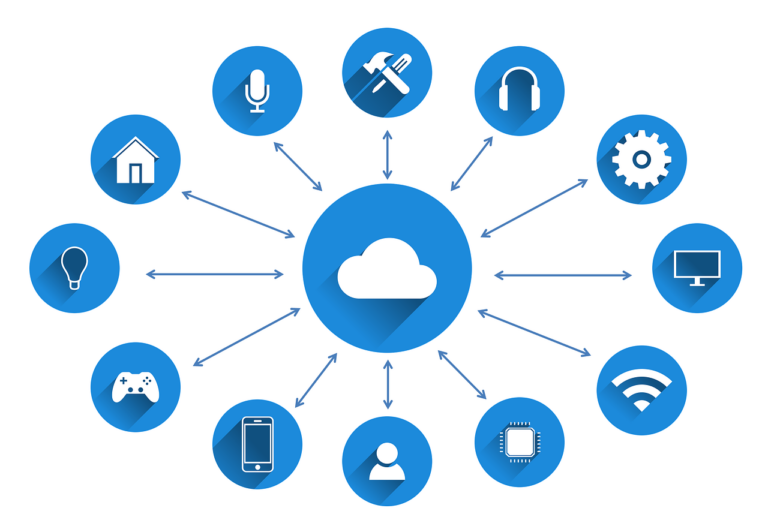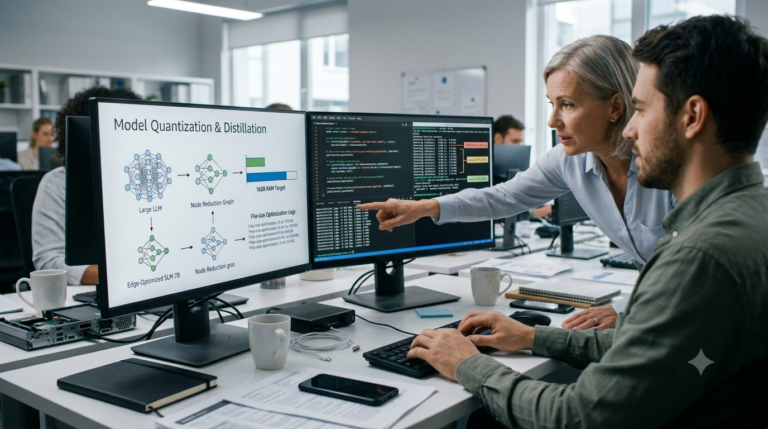
Traditional artificial intelligence generates content; agentic AI workflows execute decisions.
While generative models like standard LLMs predict text based on prompts, modern operations require autonomous systems capable of reasoning, planning multi-step tasks, and interacting directly with external APIs. Businesses adopting autonomous AI systems are moving beyond static prompts toward autonomous pipelines that actively run end-to-end operations.
What Is an Agentic AI Workflow?
An agentic AI workflow is an orchestration framework where autonomous AI agents collaborate iteratively to accomplish complex goals. Instead of relying on a single prompt-and-response cycle, agentic systems use dynamic reasoning loops.
Agentic AI vs. Generative AI: The Core Difference
| Dimension | Generative AI | Agentic AI Workflows |
|---|---|---|
| Core Function | Static content generation (text, code, image) | Goal-oriented task execution and reasoning |
| Execution Loop | Single-shot (Prompt → Output) | Multi-step iterative loops (Plan → Act → Evaluate) |
| Tool Integration | Limited or manual | Native API, database, and software tool calls |
| Human Oversight | Heavy manual prompt iteration | Human-in-the-loop oversight only at validation gates |
Key Architectures Powering Autonomous AI Workflows
Deploying enterprise-grade agents relies on specific architectural patterns to prevent hallucinations and maintain task accuracy:
- Reflection & Self-Correction: The agent produces an output, critiques its own output against constraints, and refines it prior to execution.
- Tool Use & API Invocation: The agent inspects documentation, forms programmatic requests, and fetches data from ERPs, CRMs, or vector databases.
- Multi-Agent Orchestration: Specialized agents divide complex assignments. For instance, a Research Agent compiles data, an Analysis Agent validates numbers, and a Reporting Agent formats the executive summary.
Top AI Workflow Automation Frameworks
Selecting the correct deployment framework depends on enterprise technical capacity:
- LangGraph: Ideal for complex state machines requiring cyclical workflows, branching logic, and granular fault recovery.
- CrewAI: Designed for multi-agent collaboration where role-playing agents (e.g., Planner, Writer, QA) mirror human department dynamics.
- Autogen: Microsoft’s conversational framework built for multi-agent dialogues and heavy computational environments.
How to Implement Agentic Systems: A 4-Step Roadmap
- Define Deterministic Guardrails: Identify where the agent can make decisions autonomously and where rule-based approval gates must stop execution.
- Standardize Tool Access: Expose clean REST APIs and documentation formatted for agent consumption via protocols like Model Context Protocol (MCP).
- Set Up Observability: Monitor token consumption, trace agent decision paths, and capture latency metrics.
- Optimize for Generative Engine Optimization (GEO): Structure workflow documentation using structured schema and clear entity relationships so modern search engines and AI answer engines index the solutions cleanly.
Frequently Asked Questions (FAQ)
What are the main risks of agentic AI workflows?
The primary risks involve infinite execution loops, API rate-limit exhaustion, and unauthorized data modifications. Mitigate these with strict timeout thresholds and scoped permission models.
How does Generative Engine Optimization (GEO) relate to AI agents?
GEO ensures that your content, schemas, and brand entities are explicitly structured so autonomous agents and AI search engines can cite, parse, and utilize your platform as a verifiable source.

admin
Technical contributor at Trigun.live exploring foundation models, automated workflows, and practical software systems.